What makes a good porta potty spot?
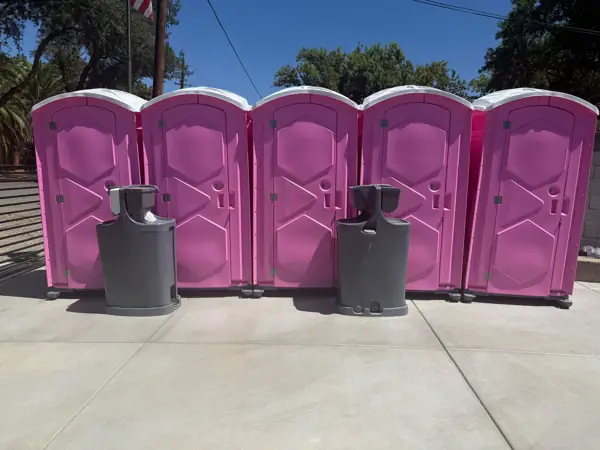
A good porta potty spot has firm, level ground, sits within about 15 feet of where our truck can park, and has about 10 feet of clear width for the truck to get close. The 15-foot reach lets the service hose pump the tank. Low wires and tree branches can block the truck.
| Need | Why it matters |
|---|---|
| Firm, level ground | A unit on a slope or soft mud can lean or tip. |
| Within about 15 feet of truck parking | Service hose reach for pumping and cleaning. |
| About 10 feet of clear truck width | Delivery trucks need room to back in. |
| No low wires or branches | Truck and unit height clearance. |
| 48-inch or wider gate for backyards | A standard unit is about 44 inches wide. |
How wide does a gate need to be for a porta potty?
A gate needs an opening of at least 48 inches for a standard porta potty, which is about 44 inches wide and 47 inches deep. Our crew hand-places the unit through the gate. A wheelchair-accessible unit is about 87 inches wide, so it needs a spot the truck can reach directly.
| Unit | H x W x D | Empty weight | Fits a 48-in gate? |
|---|---|---|---|
| Standard | ~92 x 44 x 47 in | ~190 lb | Yes |
| Deluxe flushing with sink | ~92 x 44 x 48 in | ~230 lb | Yes |
| Wheelchair-accessible (ADA-style) | ~90 x 87 x 87 in | ~320 lb | No |
| Hand washing station, 2-sink | ~56 x 30 x 35 in | ~90 lb | Yes |
| 2-stall restroom trailer | ~10 x 7 ft + tongue | Towed | No |
Measure the narrowest point on the path, not just the gate. A side-yard AC unit or trash cans can pinch the path below 48 inches.
Can a porta potty go on grass or a slope?
A porta potty can go on grass if the ground is firm and level, but not on a slope. Houston-area soil gets soft after rain, and the area averages about 55.6 inches of rain a year. A unit on soft or sloped ground can sink on one side, lean and tip over.
- Best: concrete, a driveway edge, a patio or packed gravel.
- Good: flat, dry lawn on higher ground.
- Avoid: slopes, ditches, low spots that hold water.
- Avoid: septic tank lids, drain fields and sprinkler heads.
Where should porta potties go at an event?
Event porta potties should sit together in a cluster, a short walk from the food and seating, on a firm path guests can find. Put 1 hand washing station next to the cluster if food is served. Public events need at least 1 wheelchair-accessible unit in each cluster, on a firm, level route.
A cluster is easier for guests to find and for our truck to service. Light the area for evening events with a battery lantern or string lights.
Keep doors facing away from the main seating area. In summer, afternoon shade on the east side of a building keeps units cooler.
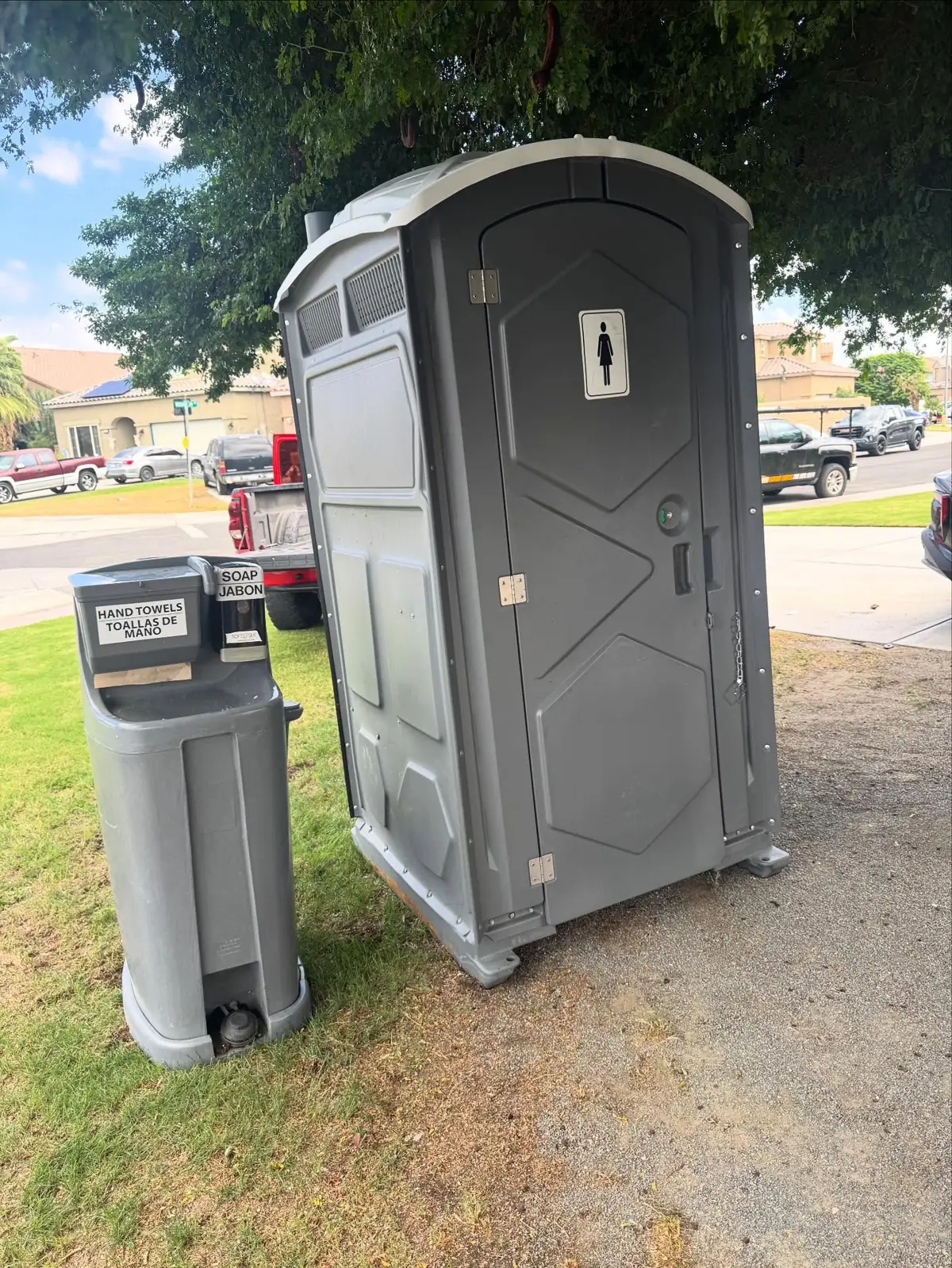
Accessible units need a 60-inch diameter turning space inside and a clear route to the door.
See the U.S. Access Board's ADA Standards and our wheelchair-accessible unit page. For headcounts, use our sizing guide.
Do you need to be home when the porta potty is delivered?
Nobody needs to be home when a porta potty is delivered. Put a cone, flag or ribbon on the exact spot you picked, then unlock the gate or text us the code. Your phone rings about 30 minutes before the truck gets there. Drivers run 7 a.m. to 5 p.m., and we give a delivery day, not an exact hour.
If the marked spot does not work, the driver calls you to pick another. Hosting at home? Our backyard party guide covers yard setups.
Can a porta potty go in the street in Pasadena?
A porta potty in the street or public right-of-way may need city approval in Pasadena. Call the City of Pasadena Permit Department at 1149 Ellsworth Dr, 713-475-5575, to confirm before booking a street spot. We place units on private property, like your driveway or yard, by default.
Driveways are the most common home spot because the truck can reach them easily. Check HOA rules if you have them. Learn more about residential porta potty rentals, or visit the City of Pasadena site.
Where should porta potties go on a job site?
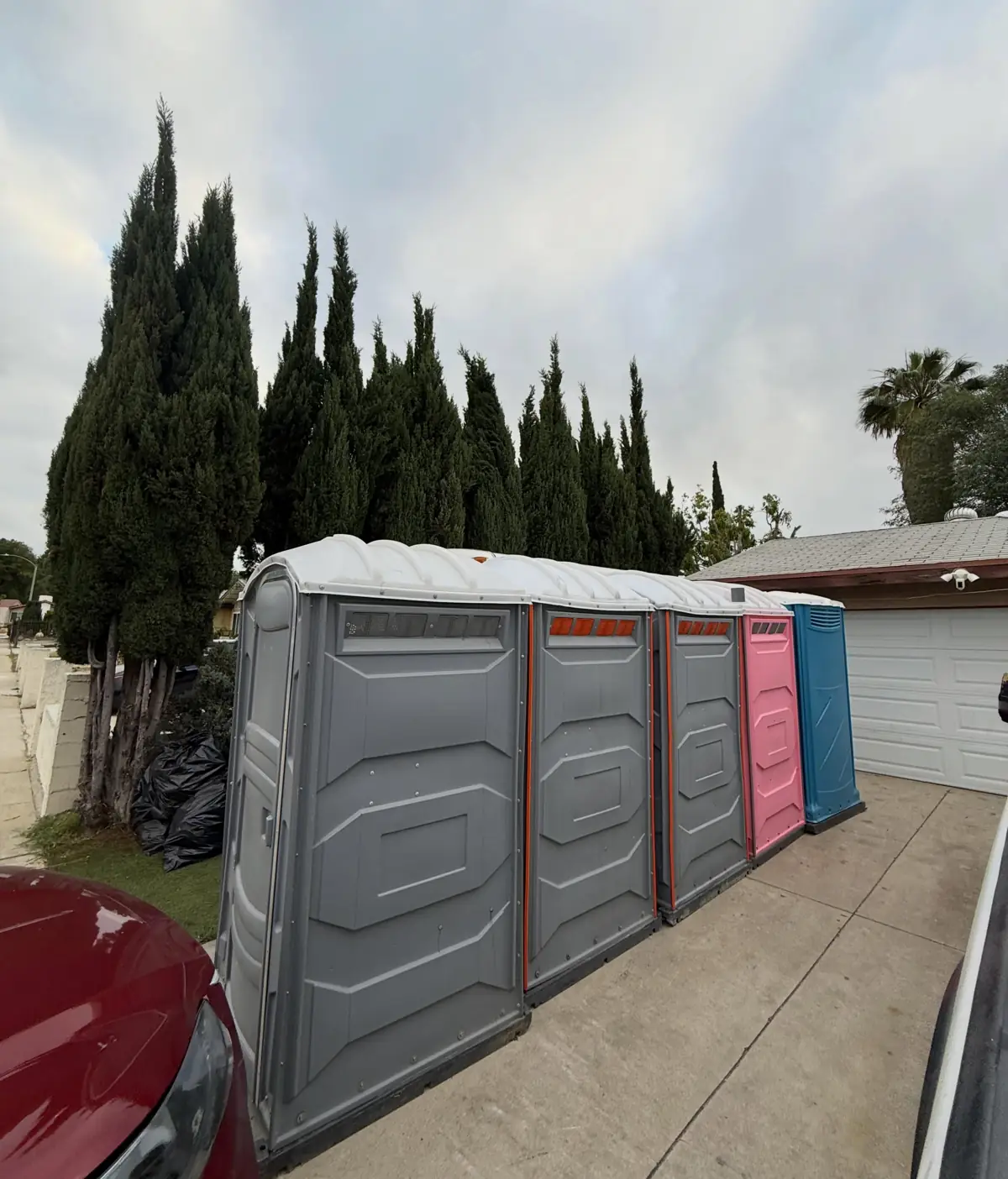
Job site porta potties should go close to the work, out of traffic paths, and within about 15 feet of a spot where a service truck can park every week. Keep units away from cranes, dump trucks and fire lanes. A lock hasp helps on public-facing or overnight sites to prevent vandalism.
As the build moves, call dispatch to move the unit. Large sites need units spread out so no worker walks too far.